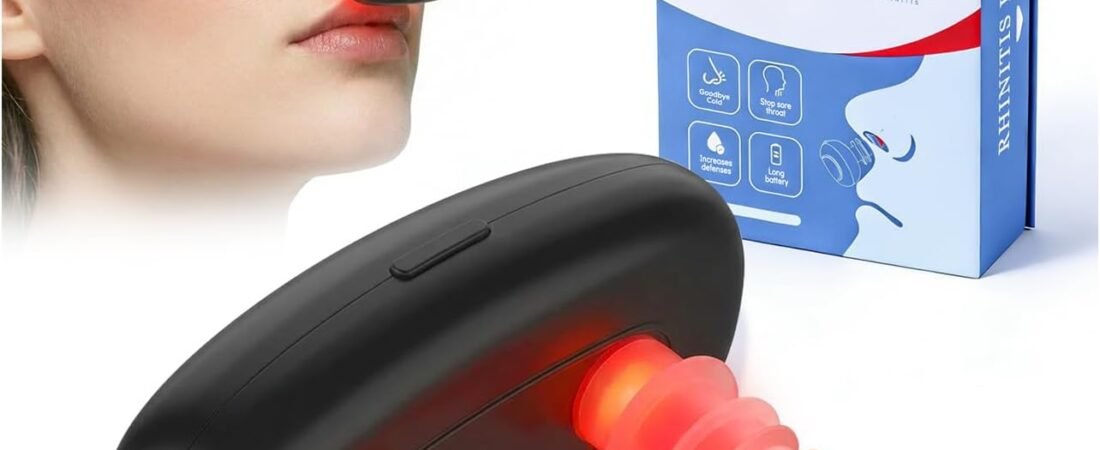
At-home light therapy has become increasingly common in personal skincare and wellness routines. Unlike conventional creams and topical products, light-based devices use specific wavelengths of visible or near-infrared light to deliver illumination directly to the skin. Different devices are designed for different areas of the body, and some are made specifically for smaller regions that can be difficult to treat comfortably with larger panels or masks.
The Red Light Nose Care Device in black is designed around this more targeted approach. Its compact format is intended for use around the nose and surrounding facial area, offering a way to incorporate localized light exposure into a personal skincare routine without using a large tabletop panel.
The concept behind red light therapy is relatively straightforward, but understanding how these devices work requires looking beyond the phrase “red light.” Wavelength, treatment distance, session duration, positioning, eye safety, device construction, and consistency can all influence how a light therapy product is used.
It is also important to distinguish between general wellness and established medical treatment. Red and near-infrared light have been studied in areas such as photobiomodulation and dermatology, but evidence varies depending on the wavelength, dose, condition being studied, and specific device. Results from clinical research on one type of light source should not automatically be assumed to apply to every consumer device.
This guide explains the basic principles behind red light therapy, how a compact nose-focused device can fit into a daily routine, what to consider before using one, and how targeted light devices compare with broader skincare and light-therapy categories.
What Is a Red Light Nose Care Device?
A red light nose care device is a compact light-based wellness or skincare device designed to deliver illumination to the skin around the nose.
The general principle behind red light therapy is called photobiomodulation. It involves exposing tissue to specific wavelengths of light, generally in the red and near-infrared portions of the spectrum.
Unlike ultraviolet light, which can damage skin with excessive exposure, red and near-infrared light are non-ionizing forms of light. Photobiomodulation research has investigated how certain wavelengths may interact with cellular processes.
A nose-focused device simply applies this concept to a smaller treatment area.
The compact form can be useful for people who do not want to use a full facial mask or a large LED panel every time they want to include localized light exposure in their routine.
However, a compact device should not automatically be assumed to deliver the same amount of light or the same coverage as a professional photobiomodulation system or a larger LED panel.
The practical purpose is targeted use, not necessarily full-face coverage.
Understanding Red Light Therapy
Before using any red light device, it helps to understand what the term actually means.
Red light refers to visible light at wavelengths generally toward the longer end of the visible spectrum. Near-infrared light sits beyond visible red light and cannot normally be seen by the human eye.
Photobiomodulation research has examined how certain wavelengths can interact with biological tissues. Researchers have investigated possible effects involving cellular energy production, inflammatory signaling, circulation, wound healing, and other biological processes.
However, the exact outcome depends on multiple factors.
These include:
- The wavelength of light
- Irradiance
- Energy delivered over time
- Distance between the device and skin
- Treatment duration
- Frequency of use
- Area being treated
- Individual skin characteristics
- The specific condition or goal
This is why simply knowing that a device produces “red light” is not enough to predict its effect.
A responsible approach is to follow the manufacturer’s instructions and avoid assuming that more exposure automatically produces better results.
Key Features of a Lightweight Nose-Focused Device
Compact Form Factor
One of the defining characteristics of a nose care device is its smaller treatment area.
A full-face LED mask needs to cover a large portion of the face. A tabletop light panel covers an even larger area. A nose-focused device takes the opposite approach by concentrating its use around a smaller region.
This can make the device easier to store and potentially easier to incorporate into a targeted skincare routine.
A compact product may also be convenient for people who already have a broader skincare setup but want something dedicated to the nose area.
Lightweight Construction
The product is described as lightweight, which is particularly relevant for something intended to be positioned near the face.
Weight matters more when a device is worn or held close to the nose for a period of time. A lighter design can reduce the feeling of having a bulky object attached to the face.
That said, comfort depends on more than weight alone. Fit, contact points, strap or support design, heat generation, and the shape of the device can all influence how comfortable it feels.
Black Exterior
The device is presented in a black finish.
For a personal-care device, color is primarily an aesthetic consideration, although a darker exterior can also make the product visually unobtrusive when stored with other skincare accessories.
The finish itself does not determine the effectiveness of the light therapy. The relevant technical characteristics are the light source, wavelengths, output, treatment area, and operating instructions.
Targeted Treatment Area
A nose-focused device is designed around localized coverage rather than broad facial exposure.
This can be useful when a person wants to concentrate their routine on the nose or nearby facial skin.
The smaller treatment area can also mean that positioning becomes particularly important. If the device is moved significantly away from the intended area, the amount of light reaching the skin can change.
Portable Format
Compact skincare devices are generally easier to store and transport than large LED panels.
For someone who travels frequently, a small device may take up less room in a toiletry bag or personal-care kit.
Users should still protect the light-emitting components from impact and moisture according to the manufacturer’s instructions.
How Red Light Interacts With the Skin
Photobiomodulation is based on the interaction between light and biological tissue.
Certain wavelengths can penetrate the surface of the skin to varying degrees. Researchers have proposed several biological mechanisms through which red and near-infrared light may influence cellular activity.
One commonly discussed area involves mitochondria, the structures responsible for producing much of the usable energy within cells. Research has investigated whether certain wavelengths can influence cellular energy processes.
Other studies have examined potential effects related to inflammatory pathways, blood flow, tissue repair, and oxidative processes.
The important point is that these mechanisms are still an active area of scientific investigation, and the outcome depends heavily on the exact treatment parameters.
For consumers, this means that a red light device should not be viewed simply as a generic “healing light.” Different wavelengths and doses can have different biological effects, and evidence for one application does not automatically validate another.
How It Can Be Used
A targeted red light nose device can potentially be incorporated into an existing skincare routine.
The simplest approach is to treat it as a dedicated light-therapy step rather than replacing basic skincare.
A routine might look like this:
- Clean the face according to normal skincare habits.
- Dry the skin if the manufacturer’s instructions call for use on clean, dry skin.
- Position the device according to its instructions.
- Turn on the light source.
- Complete the recommended session.
- Remove the device and continue with the rest of the skincare routine if appropriate.
The exact session duration should always follow the manufacturer’s instructions rather than being estimated from another light therapy product.
Before Skincare Products
Some users may prefer using a light device before applying creams, serums, or moisturizers.
This can simplify the process by ensuring that the light reaches clean skin without another product sitting between the LEDs and the treatment area.
However, not every skincare product behaves the same way under light exposure. Products containing photosensitizing ingredients or medications may require special consideration.
Anyone using prescription topical treatments should ask an appropriate healthcare professional whether light-based devices are compatible with those products.
As Part of an Evening Routine
A compact red light device can also be incorporated into an evening skincare routine.
For example:
- Cleanse the face.
- Complete the recommended light session.
- Apply normal skincare products afterward.
- Continue with the rest of the evening routine.
The main benefit of this structure is consistency. A routine that is easy to remember may be easier to maintain than a complicated sequence requiring numerous steps.
During Quiet Personal-Care Time
Because the device is designed for a small area, a user may be able to incorporate a session into a quiet personal-care period.
Reading, preparing for the next day, or sitting quietly may accompany the session if the device’s instructions permit such activities.
The device should never be used in a way that interferes with safe positioning or causes the user to ignore discomfort.
Potential Areas of Interest Around the Nose
The nose is a distinctive part of the face because it has a relatively high concentration of sebaceous glands and can be prone to oiliness, clogged pores, irritation, dryness, and visible texture.
These characteristics explain why targeted skincare products are commonly marketed for the nose.
However, it is important not to confuse general red light therapy with treatments specifically designed for acne, rosacea, sinus conditions, or other medical concerns.
If someone has persistent redness, painful acne, swelling, infection, unexplained skin changes, or another recurring issue around the nose, a dermatologist or other qualified healthcare professional can help identify the underlying cause.
A light device should not be used as a substitute for diagnosis.
Red Light and Skin Appearance
Red light therapy is frequently discussed in the context of skin appearance.
Research into photobiomodulation has investigated possible effects on collagen-related processes, inflammation, wound healing, and skin repair. Some studies have reported changes in aspects of skin appearance following controlled light treatments.
But consumer devices vary considerably.
A device’s output, wavelength, treatment duration, and design can differ from those used in research studies. Consequently, research evidence should be interpreted carefully.
A realistic approach is to view a red light device as a possible addition to a skincare routine rather than expecting immediate or dramatic cosmetic changes.
Skin appearance also depends on many other factors, including sun exposure, genetics, age, hydration, sleep, nutrition, smoking, skincare habits, and environmental conditions.
Who May Find a Targeted Light Device Suitable?
Adults Interested in Skincare Technology
People who enjoy experimenting with structured skincare routines may find targeted LED devices interesting.
They can provide a dedicated step between traditional topical skincare and larger light-therapy systems.
People With Limited Storage Space
A compact nose device may appeal to people who do not want to store a large LED panel or full facial mask.
Small devices are easier to keep in a drawer, cabinet, or toiletry area.
Frequent Travelers
A lightweight design can be convenient for people who travel frequently.
Instead of carrying a large light panel, a user can potentially pack a smaller device when maintaining a familiar routine away from home.
Travelers should protect the device from moisture and impact and follow the manufacturer’s storage and charging instructions.
People Who Prefer Targeted Routines
Not everyone needs full-face light exposure.
A person who specifically wants to focus on the nose area may prefer a device designed around localized use.
However, targeted coverage also means that other facial areas will not receive the same exposure as they would from a full-face device.
Important Things to Consider
Check the Exact Wavelengths
One of the most important technical specifications for any red light therapy device is wavelength.
Different wavelengths interact with tissue differently, and the scientific literature often focuses on specific wavelength ranges.
Before purchasing or using a light device, users interested in photobiomodulation should look for clear manufacturer information about the wavelength or wavelengths being used.
Simply seeing the phrase “red light” does not provide enough technical information to determine how a device compares with another product.
Irradiance Matters
Irradiance describes the amount of optical power delivered over an area, usually expressed in milliwatts per square centimeter.
Two devices can produce the same general color of light while delivering very different levels of irradiance.
This affects how long a session may need to be and how the total light dose is calculated.
A device with higher irradiance does not automatically mean it is more appropriate. Excessive exposure can be counterproductive, and users should follow the manufacturer’s recommended treatment schedule.
Treatment Distance
Distance from the light source can affect the amount of light reaching the skin.
A device designed to sit directly against or very close to the skin operates differently from a tabletop panel designed to be positioned farther away.
For a nose-focused product, correct placement is therefore especially important.
Eye Safety
Light therapy devices used near the face require attention to eye safety.
Users should follow the manufacturer’s instructions regarding eye protection, viewing direction, operating distance, and recommended session conditions.
The fact that red light is visible and generally lower energy than ultraviolet light does not mean it should be stared at directly.
If the product instructions specify protective eyewear, it should be used as directed.
Skin Sensitivity
People with sensitive skin should introduce any new skincare technology cautiously.
Light itself may not cause the same type of irritation as an aggressive exfoliant, but individual responses vary.
Heat, pressure from the device, cleaning products, or skincare products used alongside the device can also contribute to irritation.
Photosensitivity
Some medications and medical conditions can increase sensitivity to light.
Certain antibiotics, acne medications, herbal products, and other substances can cause photosensitivity.
Anyone taking medication that carries photosensitivity warnings should consult a healthcare professional before using a light therapy device.
Existing Skin Conditions
People with rosacea, eczema, active infections, unexplained lesions, suspicious moles, or other significant skin conditions should avoid assuming that a red light device is appropriate.
A dermatologist can determine whether light therapy is suitable for a particular skin condition.
Do Not Increase Exposure Randomly
More light is not necessarily better.
Photobiomodulation depends on dose. Too little may be ineffective, while excessive exposure may not provide additional benefit and can create unwanted effects depending on the device and individual.
Users should follow the manufacturer’s recommended duration and frequency.
Red Light Devices Compared With Other Skincare Categories
A targeted red light device occupies a different place in a skincare routine from conventional topical products and other beauty tools.
Red Light Devices vs. Facial Serums
Serums deliver topical ingredients directly to the skin.
Depending on their formulation, they may contain ingredients such as hyaluronic acid, niacinamide, vitamin C, peptides, or other cosmetic compounds.
Red light devices do not work by delivering an ingredient to the skin. Instead, they expose the skin to light.
The two approaches are therefore fundamentally different and may serve different purposes.
Red Light Devices vs. Chemical Exfoliants
Chemical exfoliants use ingredients such as alpha hydroxy acids, beta hydroxy acids, or other compounds to influence the outer layers of the skin.
Light therapy does not exfoliate the skin in this way.
People should also consider product compatibility when combining treatments. Using several aggressive skincare techniques simultaneously can increase irritation risk.
Red Light Devices vs. Blue Light Devices
Red and blue light are different wavelengths with different areas of research.
Blue-light devices are commonly marketed around acne-related skincare because certain blue-light wavelengths can interact with acne-associated bacteria.
Red-light devices are generally discussed in connection with photobiomodulation and skin-repair or inflammation-related research.
The two should not be treated as interchangeable.
Some devices combine multiple wavelengths, but a single-wavelength device has a different purpose.
Red Light Devices vs. Full-Face LED Masks
A full-face LED mask is designed to cover a much larger area.
A nose-focused device provides more localized coverage.
The choice between the categories depends partly on the user’s intended treatment area.
Someone interested in treating the entire face may prefer broad coverage, while someone focused on the nose may value a smaller form factor.
Red Light Devices vs. Large Light Panels
Large panels can expose substantial areas of the body.
They are useful for users interested in broader photobiomodulation sessions but require more space and generally involve more setup.
A small nose device has the opposite emphasis: portability and localized application.
Neither category should automatically be assumed to provide identical results because their treatment parameters can differ significantly.
Creating a Simple Red Light Skincare Routine
Consistency is one of the most important practical considerations with any at-home skincare technology.
A complicated routine can quickly become difficult to maintain.
A simple routine may involve:
Morning: Cleanse and apply regular skincare products.
Evening: Cleanse the face and prepare the skin.
Light session: Use the red light device according to the manufacturer’s instructions.
After the session: Apply appropriate skincare products.
Weekly: Clean the device according to the manufacturer’s instructions and inspect it for damage.
This type of structure keeps the light device as one step rather than allowing it to dominate the entire skincare routine.
Cleaning and Maintenance
Devices that contact the face should be kept clean.
Skin oils, skincare products, sweat, and dust can accumulate on surfaces over time.
The exact cleaning method depends on the construction of the device. Users should follow the manufacturer’s instructions rather than soaking electronic components or applying household cleaners that could damage the materials.
A sensible maintenance routine can include:
- Wiping the appropriate surfaces after use
- Keeping the device dry when it is not designed for water exposure
- Storing it away from direct sunlight and excessive heat
- Protecting the LEDs from scratches or impact
- Checking cables and charging components
- Keeping the device away from children unless it is specifically designed for them
Good maintenance is particularly important for compact electronics because their small size can make components more vulnerable to accidental damage.
What Results Should Users Expect?
One of the most important principles of responsible light-therapy use is managing expectations.
Red light therapy is not an instant cosmetic procedure.
Even where research supports a particular application, visible changes may require repeated sessions over time, and individual results can vary.
Some users may notice no meaningful change.
Others may experience gradual differences in skin appearance.
Neither outcome should be interpreted as evidence that the technology universally works or does not work.
Factors such as treatment consistency, device specifications, skin type, age, existing skincare practices, and the specific concern being addressed all matter.
A consumer device should therefore be approached as a routine-based technology rather than a guaranteed transformation.
Frequently Asked Questions
What is a red light nose care device?
It is a compact light-based skincare device designed to deliver red-light exposure to the skin around the nose.
What is red light therapy?
Red light therapy is a form of photobiomodulation that uses specific wavelengths of visible red and, in some systems, near-infrared light to expose biological tissue.
Does red light therapy use UV light?
Red light therapy is different from ultraviolet therapy. Red and near-infrared light occupy different portions of the electromagnetic spectrum from UV light.
Can a red light device improve skin appearance?
Research has investigated red and near-infrared light for several skin-related applications, but results depend on the wavelength, dose, treatment schedule, and specific device. Consumer products should not be expected to produce identical results to clinical research equipment.
How long should a red light session last?
The appropriate session length depends on the specific device. Users should follow the manufacturer’s instructions rather than copying the schedule of another red light product.
Can a red light device be used every day?
Some red light products are designed for frequent use, while others have different schedules. The correct frequency depends on the manufacturer’s recommended protocol.
Should skincare products be applied before red light therapy?
Many light-therapy routines use clean skin before treatment, but the correct approach depends on the manufacturer’s instructions. Users should also consider whether any topical product or medication increases photosensitivity.
Is red light therapy suitable for sensitive skin?
People with sensitive skin may be able to use some red light devices, but individual reactions vary. Anyone with an active skin condition or significant sensitivity should seek appropriate professional advice.
Can people with photosensitive conditions use red light devices?
Not necessarily. Photosensitivity can be caused by certain medications and medical conditions. Anyone with photosensitivity concerns should consult a healthcare professional before using light therapy.
Can red light therapy replace skincare products?
No. A light device and topical skincare products operate through different mechanisms. A red light device should generally be considered an additional skincare tool rather than a universal replacement for cleansing, moisturizing, or sun protection.
Is a nose-specific device suitable for the whole face?
A nose-focused device is designed for localized coverage. It should not be assumed to provide the same coverage as a full-face LED mask or larger light panel.
Can red light therapy replace sunscreen?
No. Red light therapy does not replace sunscreen. Daily broad-spectrum sun protection remains an important part of protecting the skin from ultraviolet exposure.
Can a red light device treat medical skin conditions?
Consumer red light devices should not automatically be considered medical treatments. Anyone with a persistent or concerning skin condition should obtain an appropriate professional diagnosis and treatment recommendation.
Is red light therapy safe for everyone?
No technology is appropriate for every person. Medication, photosensitivity, existing skin conditions, eye concerns, and other individual factors can affect suitability.
What should I do if the device causes discomfort?
Stop using it and review the manufacturer’s instructions. If discomfort persists or is significant, seek appropriate professional advice.
Conclusion
The Red Light Nose Care Device represents a compact approach to at-home light-based skincare. Instead of using a large facial mask or tabletop panel, it focuses on a smaller area around the nose and is designed with portability and lightweight use in mind.
The broader technology behind red light therapy, often referred to as photobiomodulation, has been investigated in scientific and clinical settings for various biological and dermatological applications. At the same time, the specific characteristics of each consumer device matter. Wavelength, irradiance, treatment distance, session duration, coverage area, and frequency all influence how a light therapy system should be used.
For people interested in incorporating a targeted light session into their skincare routine, a compact nose-focused design can offer a different approach from full-face masks or larger panels. Its smaller size may also make storage and travel easier.
However, the device should be approached realistically. Red light is not a universal solution for every skin concern, and research findings from one device or clinical protocol should not automatically be applied to another product. Individual results can vary, and persistent skin problems should be evaluated by an appropriate healthcare professional.
Safe use is equally important. Following the manufacturer’s instructions, respecting recommended session times, considering eye safety, checking for photosensitivity risks, and maintaining the device properly can all contribute to a more responsible skincare routine.
Ultimately, a targeted red light device is best understood as one optional component of a broader approach to skin care. Consistent cleansing, moisturizing when appropriate, sun protection, healthy lifestyle habits, and professional dermatological care when necessary remain important regardless of whether a person uses light therapy.